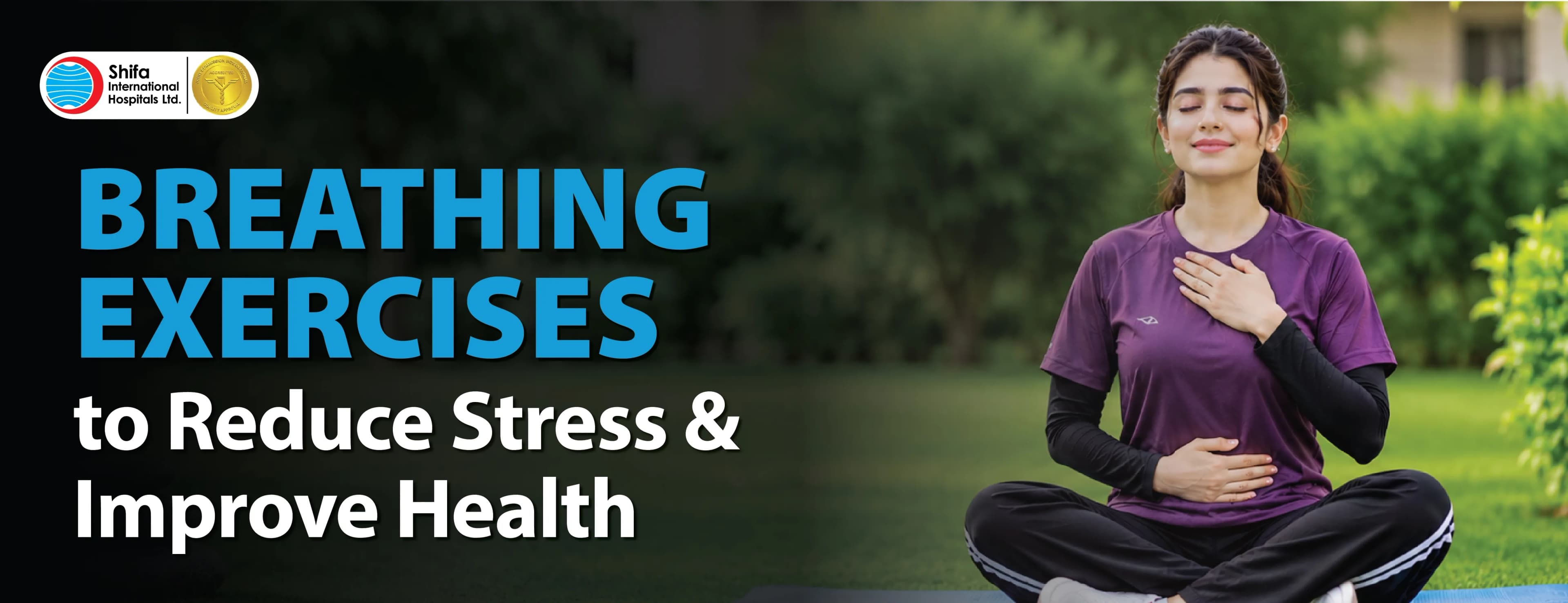
Breathing Exercises to Reduce Stress and Anxiety
 November 10, 2026

Breathing Exercises to Reduce Stress and Anxiety
Do you ever wonder how deep breathing exercises reduce your stress? Let’s find out how.
Suppose you are on your way to an important meeting, and you find yourself stuck in a traffic blockade. The minutes continue to fly by, your mind begins to race and you can feel the stress taking over. Stop for a second, take one deep breath and let it out slowly. A few moments later you will start feeling lighter.
According to the American Heart Association, slow and controlled breathing helps activate the vagus nerve, which plays an important part in regulating heart rate and calming the body’s stress response. This is one reason a single deep breath can shift your mood so quickly, even in the middle of a stressful moment.
According to experts, breathing exercises are one of the best techniques for anxiety. A few minutes of breathing exercises daily can not only calm down the body and mind, and make you sleep better. They actually improve your lifestyle.
How to Reduce Stress with Breathing?
Here are six breathing techniques that can help improve health and overall well-being. Pulmonologists in Pakistan and around the world often recommend these to patients who are dealing with lung conditions, while mental health specialists recommend them for managing stress and anxiety.
1. Pursed Lip Breathing
Some conditions like asthma or COPD can weaken the lungs and make it harder to breathe out all the stale air. With that stale air taking up space, the diaphragm cannot work properly. If you have these conditions, pursed lip breathing can be useful. It helps keep the airways open for a longer time, allowing more oxygen to enter the body and air to leave. It also improves the function of diaphragm.
How to perform pursed lip breathing?
- Breathe in slowly through the nose
- Breathe out through the mouth with pursed lips
Make sure when you breathe out, it is longer than the breath you are taking in.
2. Diaphragmatic Breathing
This technique, also known as belly breathing, is used to relieve the signs of lung problems, anxiety or stress. It helps the lungs function more efficiently.
How to perform diaphragmatic breathing?
- Start by relaxing your neck and shoulders
- Lie down and place your hands gently on your belly
- Breathe in through the nose until the belly rises
- Breathe out through the mouth for twice as long
3. Mindful Breathing
Mindful breathing is helpful if stress, sleep issues and hypertension are affecting your well-being. It encourages you to pay attention to your natural breathing. Experts say that slower breathing can lower your pulse rate and blood pressure. This helps your body settle down and brings your mind back to the present moment.
How to perform mindful breathing?
- Look for a quiet place with no distractions
- Sit or lie down; whichever is comfortable
- Focus on breathing by feeling and listening to your body
- Allow thoughts to pass through the mind without judgement
4. Deep Breathing
Deep breathing can be a real lifesaver when you are feeling stressed. One deep, steady breath can slow your heartbeat and leave you feeling calmer.
How to perform deep breathing?
- Sit somewhere comfortable and relax your shoulders
- Breathe in slowly, filling your lungs with air
- Breathe out slowly until your lungs are completely empty
- Count to 4 for each breath you take
5. Alternate Nostril Breathing
You may not have noticed but one of your nostrils is doing more work than the other. There is a yoga technique called alternate nostril breathing that helps fix this and also reduces stress by slowing down breathing.
How to perform alternate nostril breathing?
- Sit comfortably on chair or floor and breathe before starting
- Close the right nostril with the thumb of one hand
- Breathe in through the left nostril
- Close the left nostril with the fourth finger of the same hand and release the thumb
- Breathe out through the right nostril
- Breathe in through the right nostril
- Close the right nostril with the thumb and release the fourth finger
- Breathe out through the left nostril
6. Box Breathing
Box breathing is a simple and effective relaxation technique. People with stressful jobs often use it to improve their concentration and refocus themselves.
How to perform box breathing?
- Sit with your back supported and feet on the floor
- Close your eyes and breathe in through the nose while counting to 4
- Hold your breath for 4 seconds
- Breathe out through the mouth for a count of 4
- Hold your breath for 4 seconds
Repeat this exercise until you feel relaxed.
How to Start Without Making It Complicated?
Breathing exercises do not take much time. The World Health Organization’s stress management guide, Doing What Matters in Times of Stress, recommends a few minutes of daily practice to cope with everyday pressure. Consistency matters more than how long each session lasts. Here are a few ideas to get started:
- Start with 5 minutes per day and ramp up as they get easier
- If 5 minutes is too long, begin with 2 minutes per day
- After some time, practice deep breathing exercises multiple times a day
Experts recommend that you should begin with one technique, such as diaphragmatic breathing or mindful breathing and try to practice it for 1 week before moving to the second one.
Benefits of Deep Breathing Exercises
Harvard Medical School research shows that breathing exercises can trigger the body’s relaxation response. This can lower heart rate, ease muscle tension, and improve mood over time. These exercises can also help:
- Reduce pain naturally
- Trigger the release of endorphins
- Improve blood flow
- Reduce stress and anxiety
- Help improve sleep
- Increase energy levels
- Help improve posture
- Reduce swelling and acidity
- Improve digestion
Mistakes to Avoid
- Chest vs belly breathing: This will keep your shoulders tight and work against the point of the exercise, especially during diaphragmatic breathing
- Exhaling too quickly: There are a number of techniques that involve a longer and slower breath out, particularly pursed lip breathing
- Leaving after the first session: A single try does not make a difference. Consistency is what matters
- Ignoring underlying conditions: In case of difficulty breathing, chest pain or dizziness during practice, seek help from a pulmonologist
When to Seek Medical help?
Breathing exercises help but they should not be replaced with medical care especially if you are experiencing difficulty breathing, chronic stress, or if the anxiety keeps coming back. In this case, it is best to see a doctor who can identify the cause behind it. Visit Pulmonologists and mental health specialists at Shifa International Hospitals Islamabad to find the root cause of these problems.
Consultants Involved:
- Psychiatrist
- Pulmonologist
- Cardiologist
- Family Medicine/Internal Medicine
- Rehab Physiotherapy
FAQs
Disclaimer: This article is for general information only. For medical advice, please visit a healthcare professional.
Dr. Muhammad Imran
Pulmonologist
An experienced Pulmonologist at Shifa International Hospitals, Islamabad, with expertise in the diagnosis, management, and treatment of respiratory diseases and lung-related conditions. Holds an MBBS and FCPS in Pulmonology.

To book a consultation with Doctor call Shifa Helpline: 1133